
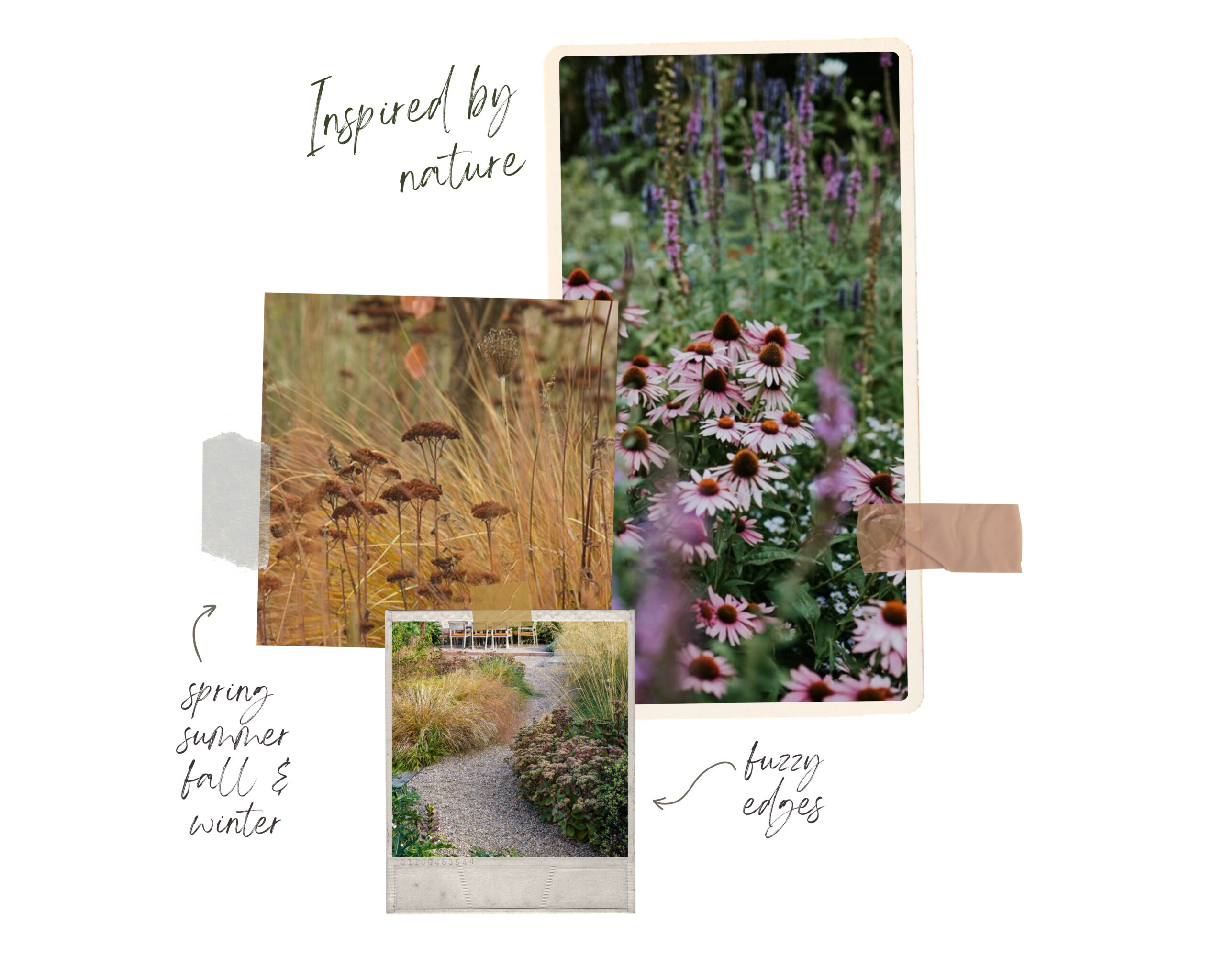
Low maintenance and fire safety are completely achievable in the Okanagan without sacrificing ecology or beauty. The key is combination planting — designing with plant communities that mimic how nature grows, using drought tolerant, climate adapted species layered together. When plants are chosen to work as a system rather than individually, landscapes become more resilient, easier to care for, and far more functional.
Here’s why this approach works so well:
• Uses less water
Plants adapted to our dry climate establish deeper roots and require far less irrigation over time.
• Lower long term maintenance
Healthy plant communities naturally suppress weeds, protect soil, and reduce the need for constant upkeep.
• Supports pollinators and wildlife
Layered planting provides food, shelter, and habitat for bees, butterflies, birds, and beneficial insects.
• Improves soil health
Roots stabilize soil, increase organic matter, and help retain moisture, creating a living system that becomes more resilient each year.
• Creates cooler, more comfortable spaces
Vegetation shades the ground, reduces reflected heat, and moderates temperatures around homes and outdoor living areas.
• Fire smart can still be beautiful
Lower flammability species, and simple gravel edges around structures provide protection without eliminating living systems.
• Seasonal beauty and movement
Unlike static rock landscapes, plant communities change through the seasons, offering color, texture, and life year round.
• Connection to place
Using native and climate adapted plants creates landscapes that feel authentic to the Okanagan and grounded in the surrounding ecology.
• Mental wellbeing
Access to greenery has been shown to reduce stress, improve mood, and encourage time spent outdoors. Even small planted areas make a difference.
The takeaway: when we design with nature instead of against it, we get landscapes that are safer, lower maintenance, ecologically rich, and more enjoyable to live in.